
Wabash Denim vs Hickory Stripe: What’s the Difference and Why It Matters
TL;DR
Wabash denim and hickory stripe look similar at a glance, but they’re built very differently and wear in completely different ways. Wabash uses discharge-printed dots on indigo denim and fades with character over time, while hickory stripe is woven with yarn-dyed stripes that stay crisp and consistent. Both come from American railroad workwear, but Japanese brands revived Wabash because of its depth, aging potential, and soul. If you care about patina, texture, and long-term wear, Wabash usually wins. If you want clean, graphic stripes that stay sharp, hickory has its place.
If you’ve spent any time around workwear, Japanese denim, or old railroad photos, you’ve seen these stripes. Maybe you’ve even worn them. And if you’re being honest, there’s a good chance you’ve mixed the two up before.
I have. Most of us have.
Wabash denim and hickory stripe sit right next to each other in workwear history, visually similar but fundamentally different. Once you understand how they’re made and how they age, you stop seeing them as interchangeable fabrics and start treating them like entirely different tools.
This isn’t a style-blog surface comparison. This is about construction, history, wear, and why certain fabrics stick with you long after the honeymoon phase ends.
Visual & Construction Differences (Where the Confusion Starts)
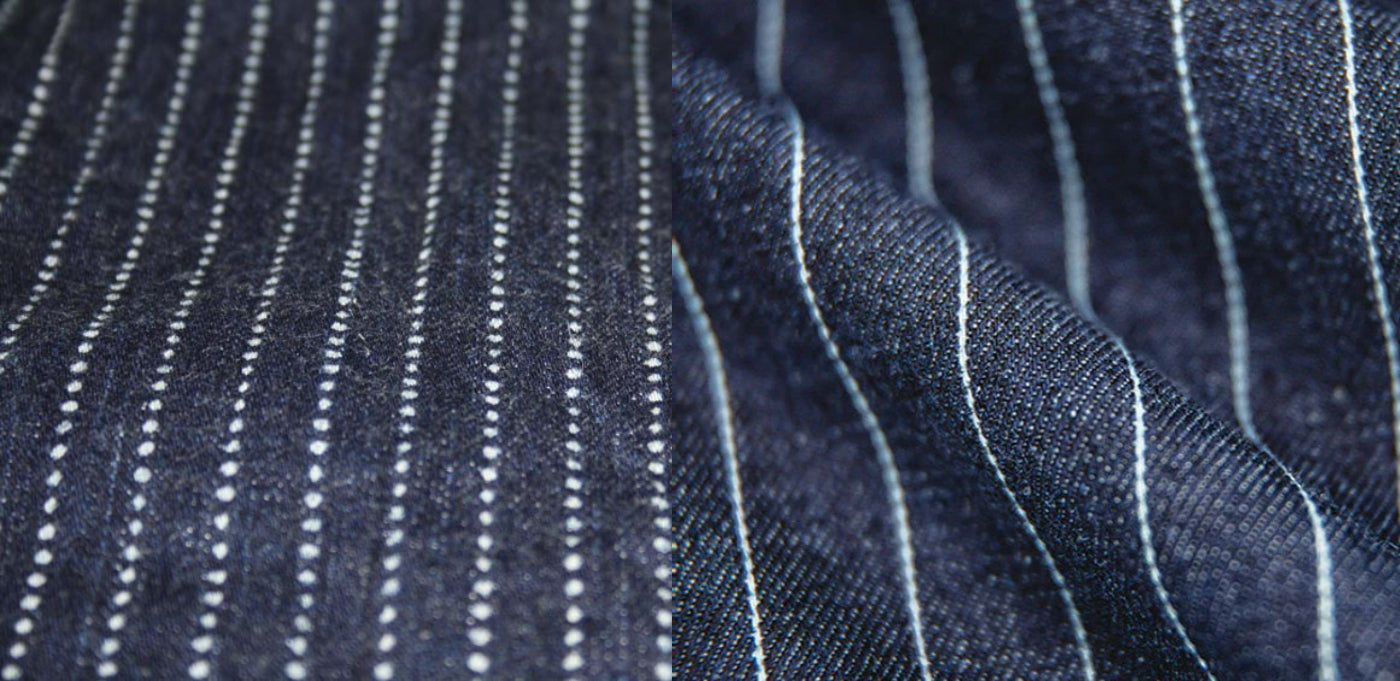
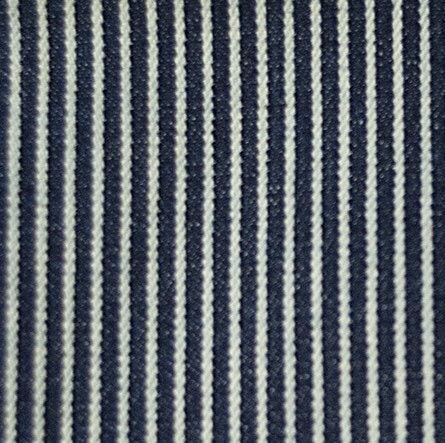

At first glance, both fabrics show vertical stripes on indigo. That’s where the similarities end.
Wabash Stripe Denim
Wabash denim starts as a solid indigo fabric. The stripes aren’t woven in. They’re printed using a discharge process, where chemicals remove indigo dye in a repeating dotted pattern. That’s why true Wabash stripes are made of tiny dots, not solid lines.
Because the base fabric is denim, it fades. The dots don’t.
Over time, the indigo recedes and the pattern gains contrast. The fabric tells on you. Where you moved, bent, worked, lived.
That’s the magic.
Hickory Stripe
Hickory stripe is yarn-dyed and woven, not printed. The stripes are built directly into the fabric, usually with alternating indigo and undyed yarns.
No dots. No discharge. No surprises.
What you see on day one is pretty close to what you’ll see on day one hundred. It softens, sure—but the visual stays consistent.
Railroad Roots: Why These Fabrics Existed at All
Both fabrics were born out of necessity, not aesthetics.
Hickory Stripe’s Job
Hickory stripe was a railroad worker’s uniform fabric. The high-contrast stripes made grease, oil, and grime less obvious. It was practical, cheap to produce, and easy to replace.
Think engineers, mechanics, maintenance crews. Function first.
Wabash Denim’s Role
Wabash denim showed up slightly later and was used for jackets, overalls, and chore coats. The dotted stripe pattern helped identify railway companies and divisions while keeping the toughness of denim.
It was branding before branding was a thing.
And unlike hickory, Wabash rewarded long-term wear. The more you used it, the better it looked.
Fabric Weight, Durability, and How They Fade
This is where modern buyers really feel the difference.
Wabash Denim
- Typically mid-to-heavyweight denim
- Built to crease, fade, and evolve
- Develops high-contrast wear patterns
- Feels stiff at first, then molds to your body
If you’ve worn raw denim before, Wabash feels familiar. It breaks in slowly and demands patience. The payoff is personal.
No two pieces age the same.
Hickory Stripe
- Usually lighter weight
- More breathable and flexible early on
- Minimal fading compared to denim
- Maintains a clean, uniform look
Hickory is comfortable fast. It doesn’t fight you. It also doesn’t transform much.
That’s not a flaw. It’s just a different promise.
Why Japanese Brands Revived Wabash (Not Hickory)
Japanese workwear brands obsess over process, aging, and imperfection. Wabash checks every box.
Discharge printing is harder to do right. It costs more. It creates variation. It fades unevenly. It feels alive.
Hickory stripe, by comparison, is straightforward. Honest. Functional. But visually static.
If you’re building garments meant to be worn for years and documented through wear, Wabash tells a better story. That’s why so many modern collections focus on it, including deep dives like The Complete Guide to Wabash Striped Denim on the Japanese Denim Jeans blog.
It’s not about hype. It’s about what happens after the first year.
Choosing Between Wabash and Hickory Today
Here’s the practical advice I wish someone gave me early on.
Choose Wabash If:
- You care about fading and patina
- You wear your clothes hard and often
- You want something that looks better with age
- You like depth, texture, and subtle chaos
Wabash pairs beautifully with raw denim, leather boots, and heavy canvas. It feels right when the rest of your outfit has weight and intention. You can see strong examples in modern collections of Japanese striped Wabash denim that stay true to the original fabric philosophy.
Choose Hickory If:
- You want a clean, graphic look
- You prefer lighter fabrics
- You like consistency over evolution
- You’re layering in warmer weather
Hickory stripe shirts and jackets still earn their place, especially when you want visual interest without committing to a long break-in period. There’s a reason it still shows up in classic workwear rotations and contemporary hickory stripe collections.
Why This Difference Actually Matters
If clothing is just clothing, it doesn’t matter.
But if you care about why something feels right after years of wear—why one jacket becomes yours and another stays just a jacket—then construction matters. History matters. Aging matters.
Wabash and hickory stripe aren’t competitors. They’re tools for different jobs.
Understanding that difference keeps you from buying the wrong thing for the right reasons.
And once you see it, you can’t unsee it.
Explore More
- Japanese workwear collections and resources at https://japanesedenimjeans.com/
- Hickory stripe pieces: https://japanesedenimjeans.com/collections/hickory-stripe
- Wabash stripe denim: https://japanesedenimjeans.com/collections/japanese-striped-wabash-denim
- Deep dive on Wabash history: https://japanesedenimjeans.com/blogs/news/the-complete-guide-to-wabash-striped-denim